
Process automation in logistics: where best to start

Many companies want to start with AI while they still work with paper and Excel. We work out with you where you stand and take the next step together.

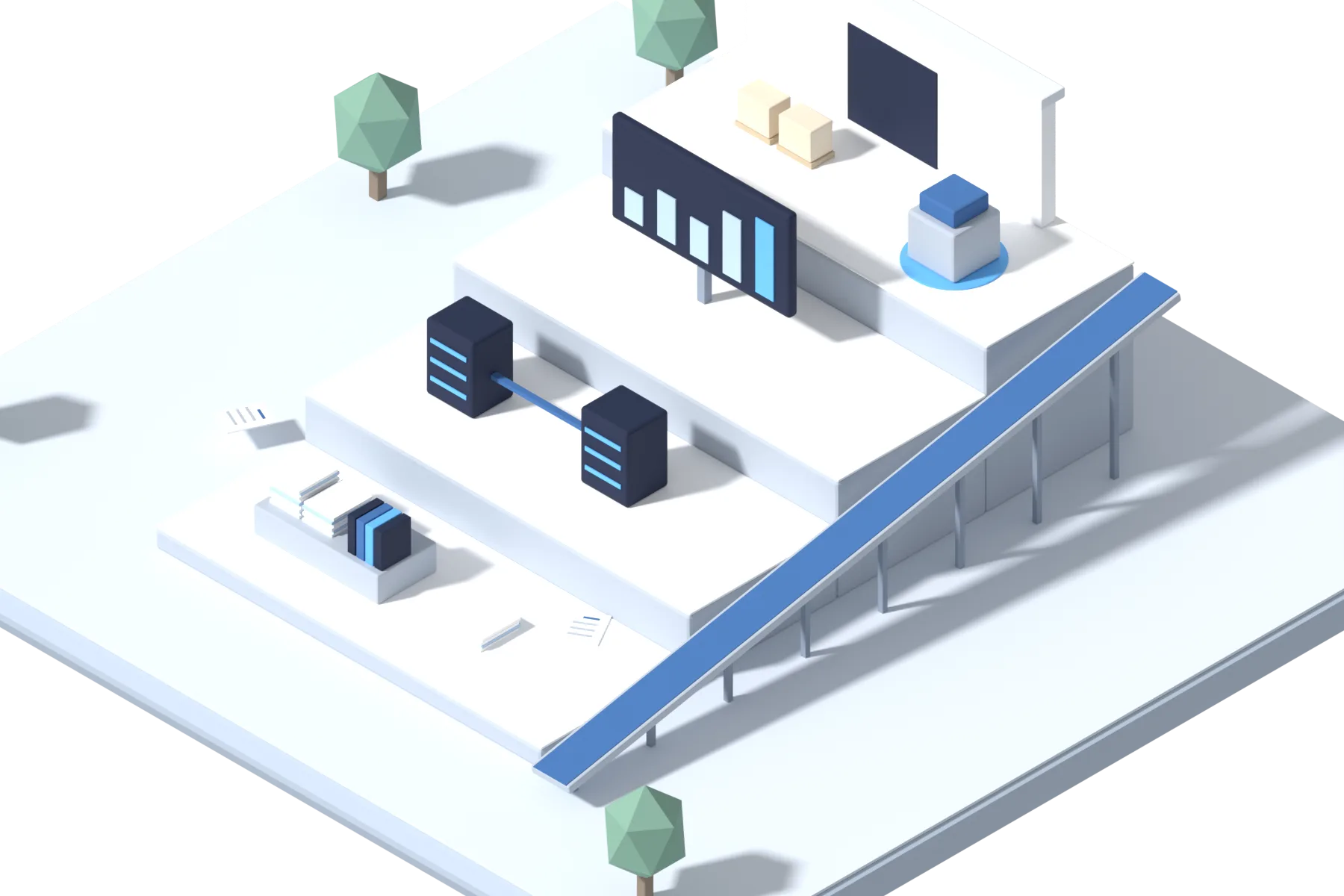
Staircase with four steps: a desk with stacks of paper, two connected systems, a control room with KPIs and automated shipping, next to a conveyor belt with parcels

Select a step.

From paper to automation
Capture data

We move whatever is on paper or in separate Excel lists today into a system. This creates the data foundation for everything that follows.

Learn more: Capture data

What is process automation in logistics?

Process automation in logistics means that an entire process runs from input to result without retyping or chasing things up.

Software takes over the recurring steps and checks, and your team takes care of the exceptions. That is why we automate the whole path an order or document takes through every station, including checks and handovers.

How it works at Werner Brüning GmbH
  1. 1
    The customer order comes inthe automation captures it
  2. 2
    The automation checks itfor mandatory information, with n8n on a self-hosted server in the Hetzner Cloud in Germany
  3. 3
    Correct records move onautomatically into the target system

If information is missing, the automation reports it to dispatch, clearly assigned to the order.

First the foundation, then the AI

AI can only work with the data that exists in your company. If orders arrive on paper, stock is kept in separate Excel lists or details are typed by hand from one system into the next, it lacks this foundation. That is why we first ask how digital your processes are today and where data is passed on by hand.

Often the biggest gain lies in closing these gaps. As soon as data flows end to end, you see in real time what is happening in the warehouse, in transport and in the yard. On this foundation we automate entire processes, and only then does AI come in where it takes work off your team.

Let's look together at where you standIn a free 45-minute intro call with Ramzi, we work out which step you are on and where it is best for you to start.

What is holding you back right now?

Ramzi opens his conversations with customers with this question. Choose the challenge that concerns you most and see which step we would start on with you.

  1. 1Capture data
  2. 2Connect processes
  3. 3Gain visibility
  4. 4Automation and AI

Step 4: Automation and AI

This is where we start

We look at which tasks your team does the same way every day, such as retyping orders or cross-checking lists. We automate the task that takes the most time first.

What it gives you: Your team has less routine work and more time for customers and exceptions.

What process automation gives you

These are the goals customers name when we ask them what an improvement to their logistics should deliver first.

More transparency and better planning

You see at any time what is happening in the warehouse and in transport, and you can plan staff, routes and stock ahead.

Less manual work

Recurring tasks such as retyping, cross-checking and chasing things up run automatically, and your team takes care of the exceptions.

Cost control and freight cost transparency

You know what your warehouse, your transport and every single shipment cost, and you make decisions on a solid basis.

Reliability and error prevention

Checks in the process detect missing or incorrect details early, so errors are caught before they reach the customer.

Better knowledge transfer

Processes are documented and mapped in the system. This helps new colleagues get up to speed faster.

Integration with systems, customers and partners

Suppliers, carriers and customers are connected directly, and data flows without detours via email and phone.

What we talk about in the intro call

To understand your starting point quickly, Ramzi goes through these four topics with you in the intro call. You do not need to prepare anything.

  1. Company and logistics structure

    We ask about your industry, the products you mainly move, the number of your sites and the number of people working in your logistics.

  2. Organisation and partners

    Do you run your logistics yourself, partly with a service provider (3PL) or fully outsourced? And are suppliers, carriers, parcel services and customers already connected to your systems?

  3. Level of digitalisation per sub-process

    For goods receipt, warehouse management, inventory management, picking, packing and labelling, shipping and goods issue, we rate together how well they are digitally supported today, from 0 for purely manual to 10 for fully digitally integrated.

  4. Goals and strategy

    We would like to know how important digital development is to you right now, whether you are improving individual sites or working on an overarching strategy, whether there are already project ideas and what an improvement should deliver for you first.

Examples from our projects

Werner Brüning GmbHWerner Brüning GmbH · Freight forwarder

Automated order data processing

For the freight forwarder Werner Brüning GmbH, we developed a solution for automated order data processing. The n8n-based automation runs on a self-hosted virtual server in the Hetzner Cloud in Germany. It captures incoming customer orders, checks them for mandatory information, reports missing information to dispatch with a clear order assignment and automatically transfers correct records to the target system.

Ramzi Sammouri, Head of Smart Logistics at bviseOn the project: Ramzi

Big DutchmanBig Dutchman · Vechta · AI project

How every document finds its freight order

Together with the Big Dutchman team, we built a process in which AI with SAP Document AI reads supplier documents from a central mailbox and assigns them to the right freight order in SAP TM. The customs checks run along with it.

The team does less manual work, makes fewer assignment errors, and the documents reach the order faster.

What customers ask us most often

01Which logistics processes can be automated?

Automation pays off most for processes that run frequently and follow fixed rules. These include order entry from email and PDF, checking delivery documents, assigning documents to freight orders, stock postings, status updates to customers and reconciling freight invoices. At Big Dutchman, for example, AI reads supplier documents and assigns them to the right freight order in SAP TM.

02How do you measure the level of digitalisation in logistics?

We look at each sub-process individually, from goods receipt through warehouse management, inventory management, picking, packing and labelling and shipment processing to goods issue. For each one, we rate on a scale from 0 (purely manual) to 10 (fully digitally integrated) how well it is digitally supported. This shows you at a glance where the biggest gaps are and where you should start.

03Do I need clean data before I can use AI?

AI needs data it can work with, but the data does not have to be perfect. Together with you, we check which data the first use case needs and close exactly those gaps first. Often it is enough to make a single process digital from end to end.

04Is automation worthwhile if we still work a lot with Excel?

Yes, especially then. Excel lists and paper usually point to exactly the places where your team loses the most time today. We first move this data into a system and then automate the process around it.

05What is the difference between automation and process automation?

Automation takes over a single task, for example filling in a field. Process automation looks at the whole process from input to result, including checks, handovers and exceptions. As a result, the whole order goes through faster and more reliably, not just a single step.

06Where do we start?

We start with a free 45-minute intro call. If it suits both sides, we come to you for a day for the AI Check, look at your processes on site and decide together which step you tackle first.

Your contacts

Our specialists lead the intro call and also support you in your project.

Ramzi Sammouri, Head of Smart Logistics at bvise
Ramzi SammouriHead of Smart Logistics

Supports you with processes, automation, AI and choosing the right technology.

+49 176 45 74 76 97ramzi.sammouri@bvise.de

Mirco Kinzel, Head of Sales at bvise
Mirco KinzelHead of Sales

Clarifies offer and contract with you and helps you if you are not yet sure which topic fits.

+49 173 73 00 871mirco.kinzel@bvise.de

Let's talk about your processes.