Optimise transport logistics, from order to delivery

We connect your warehouse and dispatch and make your transports visible, so that less has to be handled by shouting and phone calls.

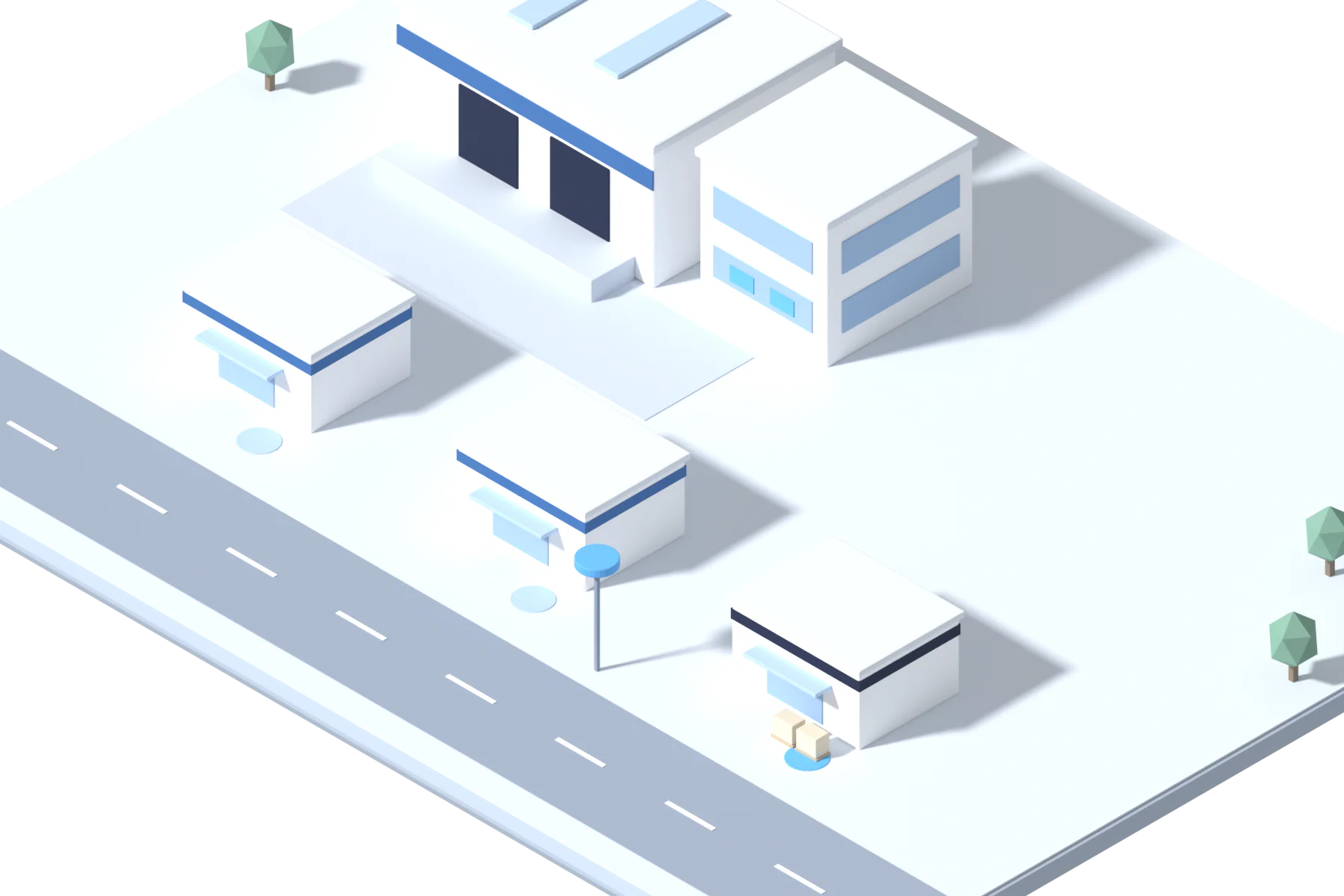
Depot with dispatch and three customers along the road, entrances facing the road

Select a step.

One route
Plan routes

We plan your routes based on capacity utilisation, time windows and costs.

Learn more: Plan routes

How can freight forwarders capture transport orders from emails and PDFs automatically?

A workflow reads the mailbox, AI extracts customer, loading and unloading point, quantity and date from the email or PDF, and fixed rules check the mandatory fields before the order is created in the TMS or ERP. If a detail is missing, the order goes to dispatch as an exception to resolve.

At the freight forwarder Werner Brüning GmbH, part of this is already running: incoming customer orders are automatically checked for mandatory information, with n8n on a self-hosted server in Germany. At Big Dutchman, AI reads supplier documents and assigns them to the right freight order in SAP TM.

We build this with the systems you already have, with or without SAP. We show how the AI recognises fields and where a person checks on our page AI in logistics.

Sound familiar?Then let's talk for 45 minutes. Afterwards we'll both know whether and how we can help you.

What changes in your transport logistics

We work out together in the AI Check which lever brings you the most. If you work with SAP, we implement the improvements in SAP TM. How we start in the warehouse beforehand is described under warehouse optimisation in intralogistics.

Warehouse and dispatch on the same page

Warehouse and dispatch see the same orders, quantities and times.

For example:There are fewer phone queries between warehouse and dispatch.

Shipments visible at any time

Telematics and messages from your partners show you delays before your customer notices them.

For example:Your customers see the delivery status themselves.

Plan routes more economically

We plan your routes based on capacity utilisation, time windows and costs.

For example:This shows you which routes you can combine.

First we understand the process, then we choose the tool

This is how we find the biggest lever in the AI Check. If you automate an unclear process, you only make mistakes faster.

Five questions before any automation
  1. Where does the information originate?
  2. In what form does it arrive?
  3. Who needs it next?
  4. Which check is needed?
  5. What happens if something is missing?
How much may the system do on its own? Select a step.

From the project at Werner Brüning GmbH: If information is missing, dispatch receives a message clearly assigned to the order.Example: Route 7 will miss its time window. The system suggests informing the customer of the new arrival time. Dispatch confirms with one click.Example: The replanning for route 7 is ready. After approval, the system enters it in the TMS and informs the driver and the customers.Example: A delivery status is missing. The system asks the driver and enters the answer. A mistake would have hardly any consequences and is easy to correct.

Which step fits depends on the consequences of errors, on data quality and on whether a step can be undone.

How to keep track of fuel costs per vehicle

Refuelling data comes in continuously and is analysed per vehicle. You see anything unusual straight away.

Sample data · October
  1. Choose analysis
  2. Select a lorry
  3. Set the next step
  • Lorry 1Articulated lorry · 11,840 km30.1
  • Lorry 2Drawbar combination · 9,720 km29.4

Lorry 3 is currently above average. Select it to see what the reason might be.

Fact
  • 36.4 l/100 km, usually 29 to 32
  • Fuel costs per km 14% above the fleet average
Possible explanation
  • More stops and city traffic on the routes
  • Maintenance or tyre pressure due
Still missing
  • Route profile for the last two weeks
  • Date of last maintenance
Next step:

This is a prompt to check, not a diagnosis: AI summarises, and a person decides. Drivers are not rated. All data is sample data.

What we have delivered with customers

Werner Brüning GmbHWerner Brüning GmbH · Freight forwarder

Automated order data processing

For the freight forwarder Werner Brüning GmbH, we developed a solution for automated order data processing. The n8n-based automation runs on a self-hosted virtual server in the Hetzner Cloud in Germany. It captures incoming customer orders, checks them for mandatory information, reports missing information to dispatch with a clear order assignment and automatically transfers correct records to the target system.

Ramzi Sammouri, Head of Smart Logistics at bviseOn the project: Ramzi

Big DutchmanBig Dutchman · Vechta · AI project

How every document finds its freight order

Together with the Big Dutchman team, we built a process in which AI with SAP Document AI reads supplier documents from a central mailbox and assigns them to the right freight order in SAP TM. The customs checks run along with it.

The team does less manual work, makes fewer assignment errors, and the documents reach the order faster.

What customers ask us most often

01Is this also worthwhile for smaller companies?

Yes. In smaller companies in particular, a lot depends on a few people, so it quickly takes pressure off when orders no longer have to be retyped.

02How does our route planning improve?

We plan your routes based on capacity utilisation, time windows and costs. This works with your TMS, with SAP TM or with a planning tool.

03Can we check freight invoices and despatch advices with AI?

Yes, especially where documents arrive as PDF or email instead of as an EDI message such as DESADV. The AI reads the invoice or advice and assigns it to the order and shipment. Fixed rules compare it with rates, surcharges and quantities, and discrepancies go to your team to resolve. If your partners already send EDI, for example under VDA 4987 in the automotive industry, we use that data directly.

04Do we need SAP or a transport management system (TMS)?

No, not necessarily. We work with and without SAP. If a TMS is needed, we compare providers with you, independent of any vendor.

05Do we need our own IT department?

No. We adapt to the capacity your team has and plan the steps accordingly. We take on many of the steps for you and explain the new processes to your team so that it can run them itself day to day.

06How does the intro call work?

The intro call is free and non-binding, and takes about 45 minutes. Together we assess your warehouse, dispatch and transport, and we point out first starting points.

07How long does implementation take?

That depends on your starting point and systems. We proceed in small steps without disrupting your day-to-day business. After the intro call and the AI Check, we agree with you on the order and pace of the next steps.

Your contacts

Our specialists lead the intro call and also support you in your project.

Ramzi Sammouri, Head of Smart Logistics at bvise
Ramzi SammouriHead of Smart Logistics

Supports you with processes, automation, AI and choosing the right technology.

+49 176 45 74 76 97ramzi.sammouri@bvise.de

Mirco Kinzel, Head of Sales at bvise
Mirco KinzelHead of Sales

Clarifies offer and contract with you and helps you if you are not yet sure which topic fits.

+49 173 73 00 871mirco.kinzel@bvise.de

Let's talk about your processes.