
Capturing orders and documents
The AI reads the email, PDF or scan and creates the order in the TMS or ERP.
For example:Your team retypes far less and has more time for customers and exceptions.
As AI consultants for logistics, we build workflows that read orders from emails and report missing details to dispatch straight away, with or without SAP.


Select a step.
The order reaches you as usual by email, PDF or scan.
Learn more: The order arrives →The order reaches you as usual by email, PDF or scan.
Learn more: The order arrives →The AI recognises the fields, and fixed rules decide what runs automatically and what a person checks.
Learn more: The AI reads and checks →The order is in your TMS or ERP, including SAP, without your team typing it in, and the warehouse can start loading.
Learn more: The order is created →The most useful AI consultancy knows warehouse and transport processes from practice and then builds the solution itself. bvise is a logistics consultancy from Oldenburg, Germany, with 20 practitioners in logistics, SAP and AI, working for mid-sized companies mainly in northern Germany: Lower Saxony, Bremen and Hamburg.
We start where your team types or chases information today, for example with orders from emails or with freight papers. How this works at Werner Brüning GmbH and Big Dutchman is shown in the examples further down.
Whether you use SAP or another system only changes the integration. For SAP projects there is our SAP logistics consulting; for warehouse and transport processes, our logistics consulting.
At bvise, AI & automation runs across warehouse and transport: we build workflows with n8n and AI models that read orders from emails or assign freight documents to the right order, and that connect to your ERP, your TMS or SAP. How warehouse and transport themselves run better is covered under Smart Logistics.
What AI agents in logistics can do today is described in our article AI agents in logistics. Where office time gets lost is covered in the article Process automation in everyday office work.
We work out together in the AI Check which use case pays off first for you. If a lot of your work still runs on paper or in Excel, find out here where to start with process automation.
The AI reads the email, PDF or scan and creates the order in the TMS or ERP.
For example:Your team retypes far less and has more time for customers and exceptions.
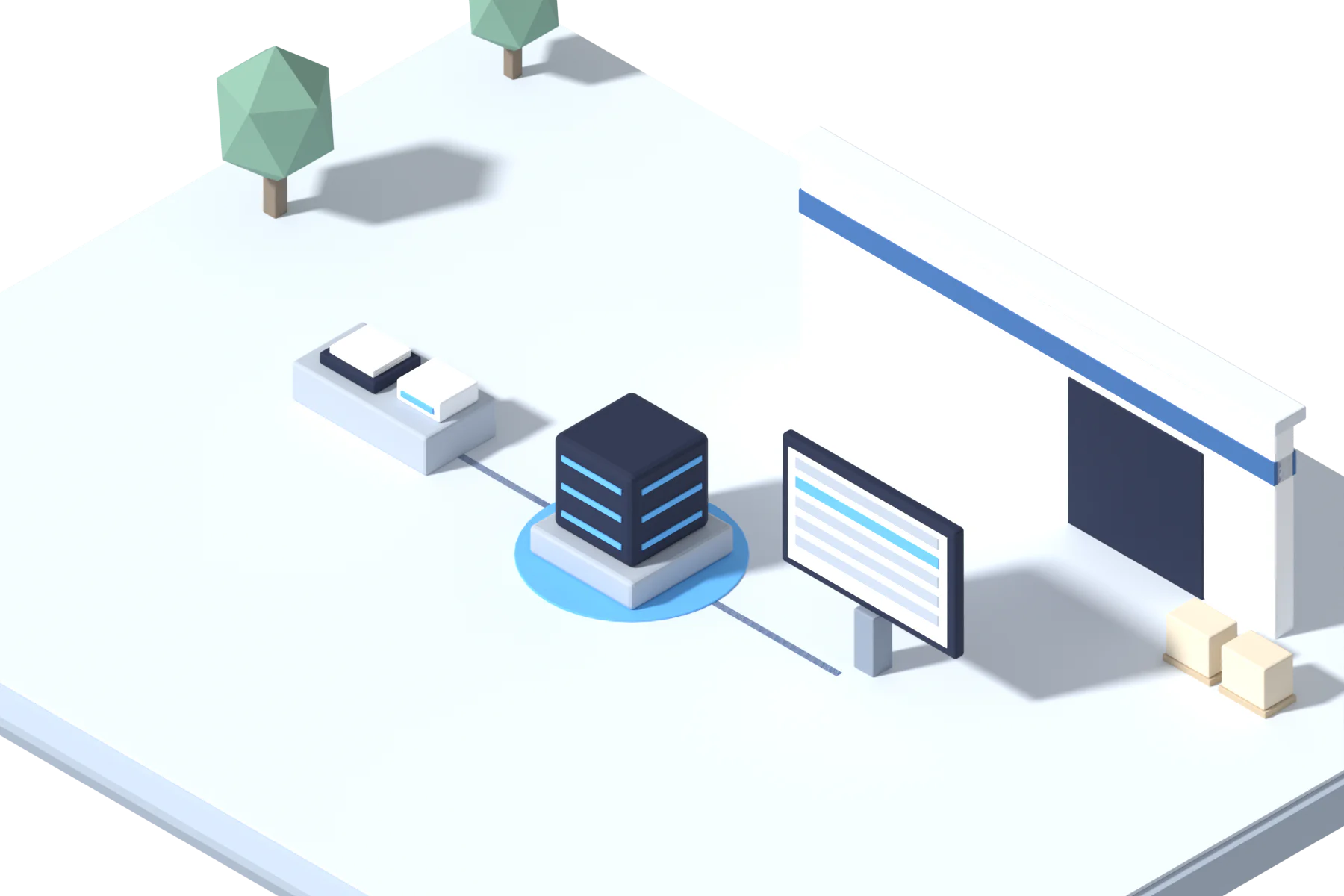
The AI matches fuel data, routes and costs and flags deviations.
For example:That way outliers show up sooner than in the monthly report.
If someone asks where a batch is, the assistant answers directly from your systems.
For example:New colleagues can find their answers on their own, too.
Here you can see a dispatch workflow we built in n8n. The AI reads the order, a fixed rule checks it, and if something is missing a person decides.
For many tasks in logistics there is off-the-shelf software. It costs a monthly fee, often per user, and only does what the vendor intended. Instead, we build the automation in n8n, tailored to your process and your systems. You don't need your own developers for this: n8n comes with ready-made building blocks for many systems, and whatever is missing we program with the help of AI. We come from logistics and make sure your team actually works with it.
n8n can be self-hosted. One workflow system covers many processes, and you don't need a separate subscription for every task. We tell you the running costs for the server and AI model in advance. When more orders come in, the same workflow processes them too, without your team having to type in more.
The workflow runs on a server in Germany, with fixed permissions for every access. You decide which data goes to an AI model.
When a new customer, a new format or another portal comes along, we add a branch to the workflow, without you needing new software.
If a step fails, the workflow reports the error and its cause. Adjustments, for example to a changed import format, are then quick to make. We take care of maintenance, and AI helps us evaluate the error messages. The workflow does not learn on its own: we use the exceptions your team resolves to sharpen rules and AI instructions, so the same case goes through next time.
Suppliers send bills of lading, packing lists and invoices to a central mailbox. The team used to upload each document to the matching freight order in SAP TM by hand and create inbound deliveries manually. Together with the Big Dutchman team we built a process in which SAP Document AI reads the container number, B/L number and date and assigns each document to the right freight order. S/4HANA creates the inbound delivery from the packing list, and the customs checks run along the way.

For the freight forwarder Werner Brüning GmbH, we developed a solution for automated order data processing. The n8n-based automation runs on a self-hosted virtual server in the Hetzner Cloud in Germany. It captures incoming customer orders, checks them for mandatory information, reports missing information to dispatch with a clear order assignment and automatically transfers correct records to the target system.

On the project: Ramzi
A workflow reads the inbox, the AI extracts the order data, and then the mandatory fields are checked. The workflow reports gaps to dispatch straight away.
AI takes routine work off your team, for example capturing orders from emails, reading delivery notes and reconciling stock. It works with your existing systems, with or without SAP.
You can. There are good programs for simply reading documents. The trouble usually starts afterwards: with special cases, with matching against your systems and with the question of who checks what. That is why we first define sources, target format and check rules and only then automate, with the program that fits your process.
Our automations run on our own server in a data centre in Germany. Before we start, we agree with you which data flows where, who can see it and which AI model works in which region. If we process data on your behalf, we sign a data processing agreement. If you prefer, everything runs in your own systems, for example in SAP. At critical points a person always checks.
In our assessment, applications such as reading orders or delivery notes do not trigger high-risk obligations. Since February 2025, certain AI practices have been prohibited and companies are expected to promote AI literacy among their staff; since August 2026, chatbots must be recognisable as AI. The rules become stricter when AI allocates tasks based on employee behaviour or assesses their performance. As things stand, these rules apply from December 2027. We help you classify your use case; the legal assessment is for you and your legal adviser.
In Germany, as a rule yes, and early on. The Works Constitution Act requires the works council to be informed while the use of AI is still being planned. If a system can record employee performance or behaviour, the works council has a right of co-determination. We describe clearly which data flows where and who has access; you agree the works agreement with the works council and your legal adviser.
No. It takes typing, searching and cross-checking off your team. Decisions with consequences are still made by a person. That way responsibility stays with your team, and the AI flags anything unclear instead of guessing.
Our specialists lead the intro call and also support you in your project.

Supports you with processes, automation, AI and choosing the right technology.
+49 176 45 74 76 97ramzi.sammouri@bvise.de

Clarifies offer and contract with you and helps you if you are not yet sure which topic fits.
+49 173 73 00 871mirco.kinzel@bvise.deYou are chatting with an AI. It answers only from this website and can make mistakes. Please do not enter personal data. Privacy (in German)