AI for hazardous substance warehouses and chemical logistics

We build the checks for hazardous substances into your processes with AI, so none is missed.

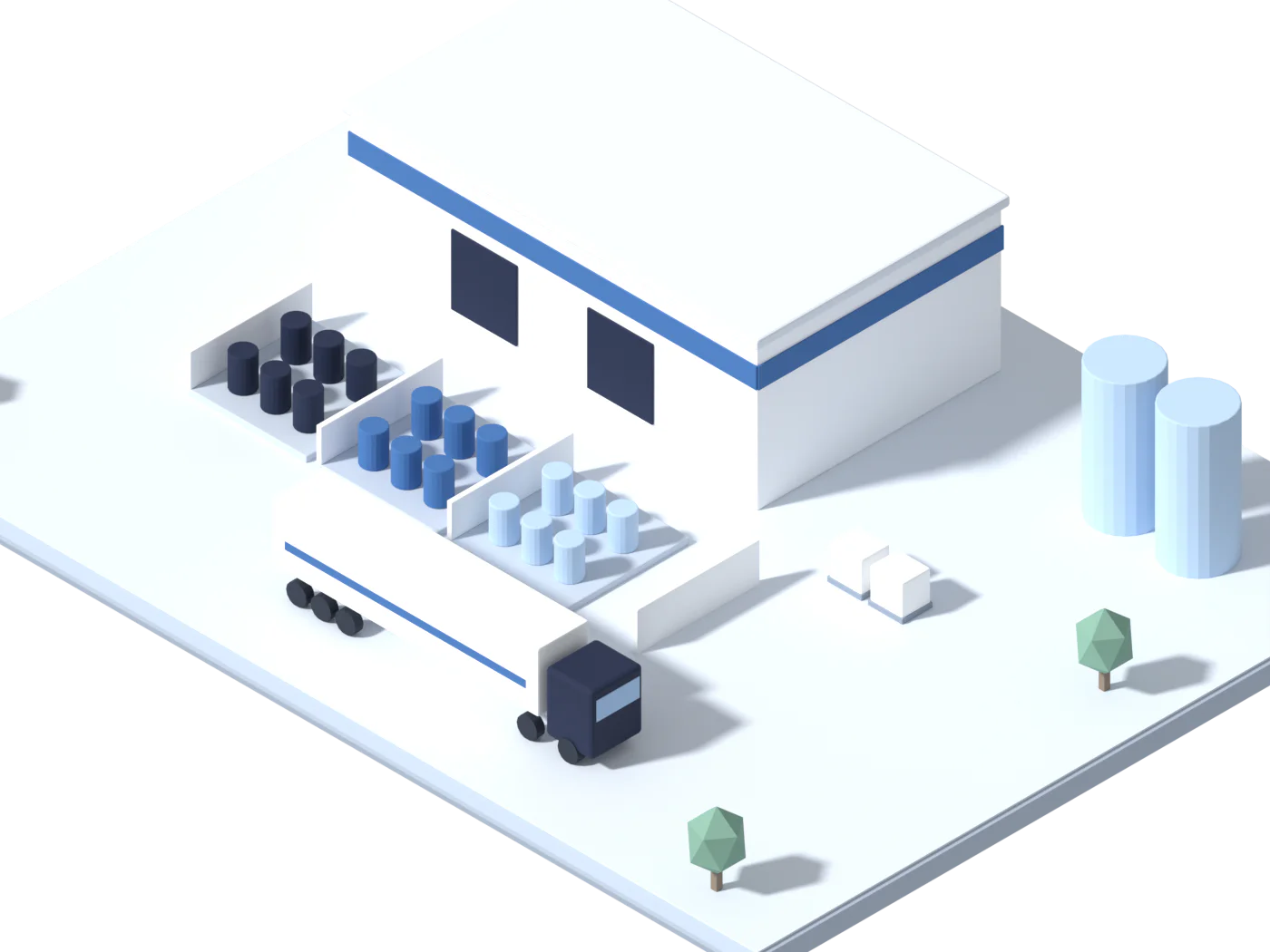
Hazardous substances warehouse with three separate sections, drums, IBCs, tanks and a lorry with a warning plate

Select a step to see more.

How a shipping order works
Stored by storage class

The system assigns every location by storage class (TRGS 510), so only what may be stored together stands together.

Learn more: Stored by storage class

How a shipping order is checked at the packing station

Before your team packs, the system calculates the points and checks the documents.

Shipping order 80-2291Customer in Bremen · one lorry
UNSubstanceClassQuantityCat.Points
UN 1263Paint3200 l2600
UN 1993Flammable liquid, n.o.s.3120 l3120
UN 1760Corrosive liquid, n.o.s.890 l2270
(UN 1263, 20 l, category 2, +60 points)
Points under ADR 1.1.3.6990 of 1,000

Up to 1,000 points, the exemptions under ADR 1.1.3.6 apply.

Checks before packing
  1. UN numbers and quantities read from the order
  2. Packaging approved for the packing group
  3. Mixed loading of classes 3 and 8 permitted
  4. Safety data sheet for UN 1760 dates from 2019: a specialist checks it

Simplified example with fictitious data. The check does not replace the dangerous goods safety adviser.

At your company, who checks the points before shipping?In 45 minutes we'll both know whether we can help you.

The checks we build firmly into your process

Storing hazardous substances together correctly

The system assigns storage locations by storage class under TRGS 510.

For example:If someone tries to put goods away in the wrong location, the scanner rejects the posting.
Shipping dangerous goods safely

Rules check the UN number, packaging and points before packing.

For example:Errors are spotted at the packing station, before the carrier takes over the goods.

Keeping safety data sheets up to date

The AI reads new data sheets and reports what is missing or out of date.

For example:A data sheet from 2019 in the old format is flagged before anyone needs it.

Ramzi Sammouri, Head of Smart Logistics at bvise
Ramzi SammouriHead of Smart Logistics

What Ramzi asks on the first walk-through

  1. Who at your company calculates the points before shipping, and how long does it take?
  2. How old is the oldest safety data sheet still sitting in your system?
  3. How does the forklift driver know that two substances must not be stored next to each other?

Which rules apply in a hazardous substances warehouse and where AI helps

In a hazardous materials warehouse several sets of rules apply at once, from TRGS 510 for storage to the ADR for shipping. In our team, an IHK-certified dangerous goods officer for road and sea knows these rules from practice. We connect AI to your ERP or warehouse system and support your team until it works with it. How the rules apply to your substances we clarify together with your dangerous goods officer and your occupational safety specialist. How we approach AI projects is described under AI in logistics.

  1. Storage compatibility under TRGS 510

    The German technical rule TRGS 510 assigns every hazardous substance to a storage class and defines which classes may be stored together, must be kept apart or only under conditions. The system knows the storage class of every item and only assigns locations where the combination is allowed.

  2. Safety data sheets under REACH

    Since 2023, safety data sheets have had to follow the format of Regulation (EU) 2020/878. If a substance's classification changes, the supplier usually sends a new version. The AI reads incoming data sheets, compares the UN number, classification and storage instructions with your master data and reports deviations.

  3. Shipping dangerous goods under ADR

    ADR is revised every two years, and the current edition always applies. Before every shipment, the UN number, packaging, marking and transport document must be correct. Rules in the system calculate the points under ADR 1.1.3.6 and check the documents; doubtful cases go to your dangerous goods safety adviser.

  4. Hazardous substance register and quantities

    The German Hazardous Substances Ordinance requires an up-to-date register that refers to the safety data sheets. Whether your warehouse falls under the Major Accidents Ordinance (Seveso) depends mainly on which substances are stored there and in what quantities. A workflow keeps the register up to date from your stock data and alerts you when quantities approach a threshold.

What we delivered with a chemical distributor

NordmannNordmann · Chemical distribution · SAP S/4HANA Private Cloud

SAP S/4HANA is live in Austria and Germany

Together with Nordmann, we managed cutover and testing for both go-lives and introduced finance, warehouse and SAP TM with freight cost settlement.

Both countries run on SAP S/4HANA, and today we support operations and the rollouts to further countries.

Michael Kroschwitz, Founder and Managing Director at bviseChristoph Benkendorf, Founder and Managing Director at bviseRamzi Sammouri, Head of Smart Logistics at bviseOn the project: Michael, Christoph and Ramzi

What customers ask us most often

01Do you only work with SAP in the chemical industry?

No. With SAP, EWM checks storage compatibility, and SAP TM checks shipping using the dangerous goods data from S/4HANA. Without SAP, we connect the checks to your system.

02Does automation replace the dangerous goods safety adviser?

No. Rules and AI take over the recurring checks and so take work off your team. In cases of doubt, your experts still make the decision.

03Where does our data go when the AI reads data sheets?

You decide. The workflow can run on a server in Germany, and you determine which data goes to an AI model.

04Where do we start?

We start with a free intro call. If it is a good fit, the AI Check follows: we spend a day with you on site and then decide together in what order you tackle the topics.

Your contacts

Ramzi comes to you and looks at your warehouse and packing station on site. Mirco then takes care of the quote and contract.

Ramzi Sammouri, Head of Smart Logistics at bvise
Ramzi SammouriHead of Smart Logistics

Supports you with processes, automation, AI and choosing the right technology.

+49 176 45 74 76 97ramzi.sammouri@bvise.de

Mirco Kinzel, Head of Sales at bvise
Mirco KinzelHead of Sales

Clarifies offer and contract with you and helps you if you are not yet sure which topic fits.

+49 173 73 00 871mirco.kinzel@bvise.de

Let's talk about your processes.